
- Customer case
- – AI, E-commerce, Generative AI, Retail
- –
How Stockmann uses generative AI to accelerate e-commerce product management

Paiju Koivula
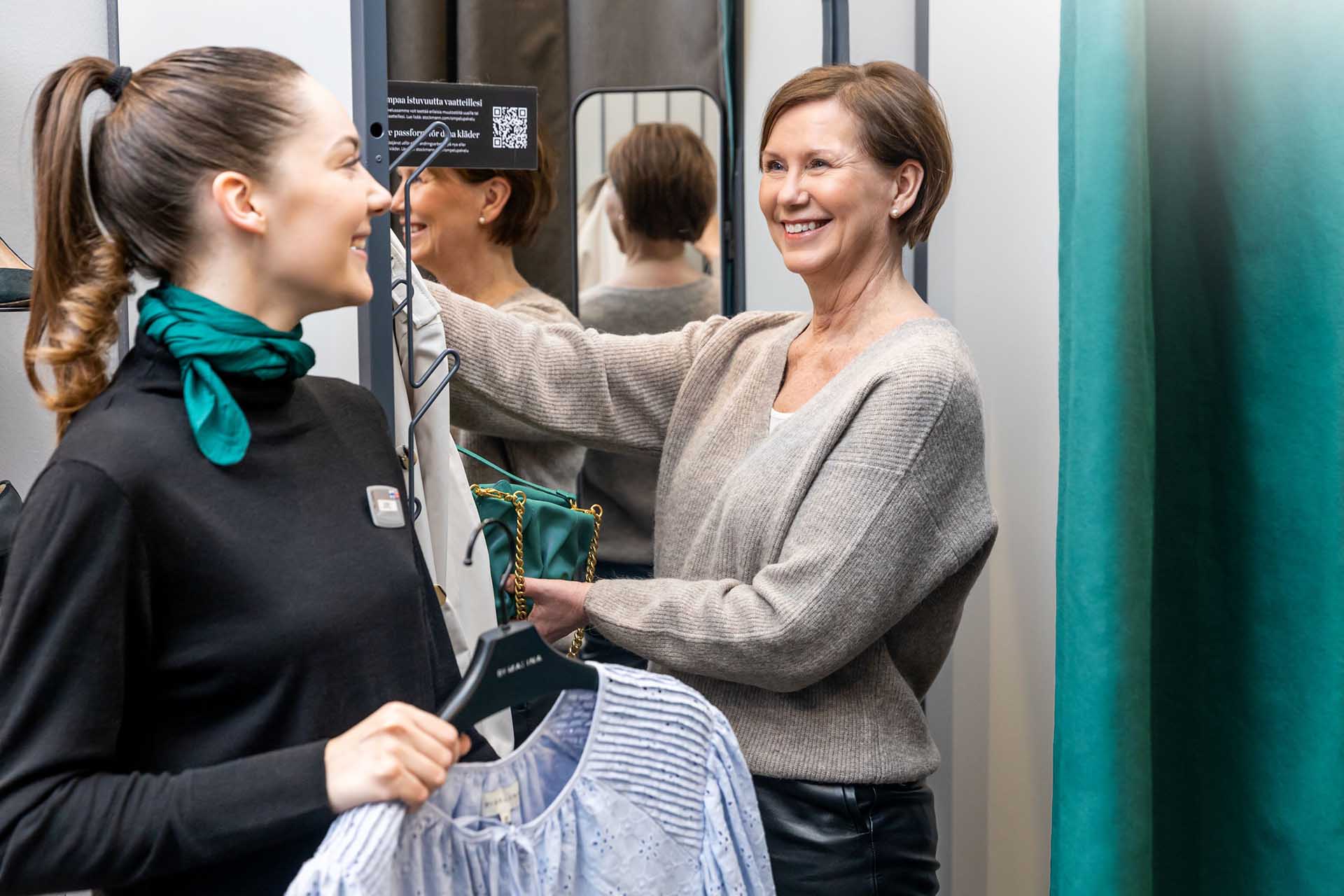
Stockmann has been systematically developing automation for years, and AI is already being built on top of the strong automation foundation. The latest step in this journey is a generative AI-powered solution that automates e-commerce product management, accelerates the time-to-market of products, and frees up experts’ time for more creative and strategic work.
Automation is widely utilized across Stockmann’s organization, including finance, supply chain, and human resources. The company’s automation strategy focuses on high-volume processes and use cases where automation can generate significant business value.
Stockmann actively measures the results of its automation initiatives, and the results for 2025 were significant: 7,426 working hours saved (equivalent to 990 working days), more than one hundred thousand transactions processed by automations, and over 2,300 hours of automated process runtime during the year.
“Our volumes have increased even further since then, as the new automations had only been running for one quarter during that year,” explains Pauli Dahlbom, Head of Data & Analytics at Stockmann.
The KPI's for Stockmann's automation

We started our strategy with clear use cases that delivered value quickly and generated significant benefits with relatively small investments. Once the underlying processes are running efficiently, it becomes natural to start building AI on top of them. AI has enabled us to expand automation into areas that could not previously be solved with traditional rule-based automation”
A strong automation foundation creates the right conditions for AI
Stockmann’s goal is to build an ecosystem where automation, data utilization, and AI work together to support the business. The company uses AI for product data enrichment, image processing and automated naming, synchronization of information between systems, as well as automated reporting and analytics.
“We started our strategy with clear use cases that delivered value quickly and generated significant benefits with relatively small investments. Once the underlying processes are running efficiently, it becomes natural to start building AI on top of them. AI has enabled us to expand automation into areas that could not previously be solved with traditional rule-based automation,” describes Dahlbom.
Generative AI and automation solved a bottleneck in e-commerce product data management
Stockmann and Sisua Digital built a modern solution to streamline e-commerce product management, where generative AI and automation work together to process product images at scale. Processing more than 50,000 products manually was not only a significant bottleneck but also a business-critical use case.
“In retail, commercially important capabilities such as personalization, better product recommendations, and product search are all built on top of product data. That is why product data quality and the efficiency of underlying processes are strategically important to us – they create the foundation that enables us to leverage new technologies and remain competitive in the future,” Dahlbom explains.
Previously, the process was entirely manual. Multiple employees collected information, logged into supplier portals, and copied data into various systems.
“This process involves very high volumes, and it is repetitive and clearly defined, making it relatively easy to tackle. We have multiple product categories, and especially in fashion, product range change rapidly from quarter to quarter, which means the number of product images is enormous. In addition, we use around 200 different image banks, all of which look and function differently,” says Dahlbom.
Now, automation reads a list of products missing images, retrieves the images from supplier image banks, and transfers them to AI for analysis. Generative AI identifies the product category, image angle, and other requirements, after which the images are processed according to Stockmann’s brand and e-commerce requirements: they are named, prioritized, and stored for employee validation.
If a product is missing information or images, it cannot be sold online. Previously, large deliveries created long backlogs, but now we can process them much more efficiently and get new arrivals and seasonal products online significantly faster”
Generative AI enables better product content, customer experience, and search visibility
As a result of the solution, manual work has been eliminated, products reach the web store faster, and product data has become more consistent and higher in quality.
“If a product is missing information or images, it cannot be sold online. Previously, large deliveries created long backlogs, but now we can process them much more efficiently and get new arrivals and seasonal products online significantly faster,” Dahlbom explains.
Higher-quality product data has a direct impact on sales, discoverability, and customer experience.
“Previously, employees spent their time managing image banks, and there was not always enough time to create comprehensive product information. Now robots and AI handle the mechanical work, allowing experts to focus on enriching product data, creating content, and guiding AI. This enables better product descriptions, more inspiring product imagery, improved conversion rates, and a more personalized customer experience, while also helping marketing respond faster to campaigns and trends,” says Dahlbom.
Better product data creates new opportunities for development
Although the solution has delivered significant efficiency gains, its greatest value lies in the foundation it creates for future development.
“Better product data creates the foundation for new use cases and development initiatives that were not previously possible. That is why the greatest value of the solution may not lie in the individual efficiency gains, but in the opportunities it unlocks,” Dahlbom explains.
“When product data is in order, we can start thinking about broader initiatives and more ambitious development opportunities. This enables marketing, buyers, and commercial teams to run the business more effectively and efficiently. An even greater reward lies ahead, and that is what we are working toward,” Dahlbom continues.
The implementation was straightforward. We had a strong foundation from previous automation projects. Once the use case had been identified and generative AI capabilities had matured sufficiently, the solution reached production quickly after only a few iterations. Sisua delivered according to expectations, and we have received positive feedback about the automation from process owners”
The collaboration between Stockmann and Sisua is built on practical execution
The collaboration between Sisua Digital and Stockmann began in 2024 when Sisua migrated all 15 of Stockmann’s automations from Blue Prism to UiPath in just one and a half months. Since then, the partnership has remained active and development has progressed rapidly.
“The development of automation is guided by consistent operating models and a clear governance framework that enable scalable solutions and continuous improvement,” says Dahlbom.
According to Dahlbom, the success of the partnership is rooted in a pragmatic approach: first identifying a clear business problem and then selecting the right technologies to solve it.
“Sisua’s model for prioritizing and implementing use cases is clear, and the process from idea to production works efficiently,” Dahlbom describes.
“The implementation was straightforward. We had a strong foundation from previous automation projects. Once the use case had been identified and generative AI capabilities had matured sufficiently, the solution reached production quickly after only a few iterations. Sisua delivered according to expectations, and we have received positive feedback about the automation from process owners,” Dahlbom continues.
Sisua has also organized automation workshops for the company, which have delivered valuable results and helped identify new development opportunities.
“From time to time, it is valuable to pause and explore new opportunities amid the demands of day-to-day operations. Otherwise, it is easy for them to remain overlooked. The workshops help inspire new ideas, make the possibilities of different technologies more tangible, bring new perspectives to the table, and raise the level of ambition for development,” Dahlbom explains.
AI strategy must be continuously reassessed as the market evolves. Our goal is to leverage AI primarily from a commercial perspective – improving decision-making, enhancing customer experience and customer understanding, and making better use of the data we have accumulated over decades”
AI supports better customer experiences and commercial decision-making
According to Dahlbom, successful AI adoption starts with clearly defining use cases and understanding which technologies are best suited to which situations.
“Not everything needs to be done with AI. Sometimes traditional automation is the right and most cost-effective solution. However, AI is rapidly expanding the possibilities of automation. Many use cases that would have been considered too complex or too labor-intensive just six months ago are now commercially viable to implement,” Dahlbom says.
Leveraging AI will remain an essential part of Stockmann’s strategy going forward.
“AI strategy must be continuously reassessed as the market evolves. Our goal is to leverage AI primarily from a commercial perspective – improving decision-making, enhancing customer experience and customer understanding, and making better use of the data we have accumulated over decades,” explains Dahlbom.
“We want to free our experts from routine tasks and shift their focus toward customer service, commercial development, and strategic thinking. We are exploring AI opportunities both in individual tasks and in broader business processes, all the way to future models of agentic commerce,” Dahlbom concludes.
Key benefits
- Faster time-to-market for products in the online store
- Improved customer experience and search visibility
- Higher-quality, more consistent, and richer product data
- Significant reduction in manual work (over 990 working days yearly)
- Reduced workload for supply chain and sales specialists
- More time for creative and strategic work
- Better product data creates new development opportunities
- A scalable process without long backlogs
- Stronger capabilities for personalization and AI-powered commerce
Stockmann
Founded in 1862, Stockmann is a marketplace for a good life. Its department stores are known for their premium selection of fashion, beauty, and home brands. In the Baltics, Stockmann’s assortment also includes high-quality food and beverages. Stockmann operates eight department stores in Finland and the Baltics, as well as the online store stockmann.com. Stockmann is part of Lindex Group plc, which is listed on Nasdaq Helsinki.
Talk to sales
Let’s start making an impact with AI-driven automation

Lauri Monni
Business Development Manager
Insights





Book a free consultation with us
Want to know how AI-driven automation could benefit your company? Tell us about your automation needs and let’s find the right solution for your company together.