

ARTICLE
10 Artificial Intelligence (AI) Trends That Will Define 2026
12.26.2025
AutHor
MATIAS SAN MARTIN
Share
A strategic and in-depth look at the evolution of AI in the coming years
Artificial Intelligence is going through one of the most decisive moments since its emergence. After an initial phase marked by experimentation, accelerated adoption of generative models, and the rise of conversational interfaces, the path toward 2026 will be defined by a consolidation phase: AI will stop being a novelty and become an essential infrastructure, comparable to what the internet or cloud computing represent today.
This change is not limited to an incremental improvement of models but involves a structural transformation in the way organizations design systems, make decisions, manage risks, and generate value. Every day AI will begin to operate more autonomously, integrated, and governed, impacting both technological and cultural levels.
What is the short-term AI outlook? Below we present the 10 key Artificial Intelligence trends for 2026, reflecting where the ecosystem is headed and what factors will be decisive for sustainable and strategic adoption.
1. From conversational assistants to agents that act
In recent years, interaction with AI has been mainly focused on conversation. However, by 2026 this paradigm will fall short. AI will evolve toward agents capable of executing concrete actions, making operational decisions, and autonomously coordinating tasks within complex digital environments.
These agents will not only interpret natural language but will understand context, objectives, and constraints. In addition, they will operate within defined frameworks, with capabilities to interact with systems, data, and other agents. Conversation will remain a relevant interface, but the real value will be in the capacity to act.
2. Human–AI collaboration as the dominant model
The discussion about whether AI will replace people will lose relevance in favor of a more pragmatic focus: human–AI collaboration. In this model, AI acts as an amplifier of human capabilities, not as a substitute.
People will concentrate on higher-value tasks (judgment, creativity, and strategy) while AI will provide speed, consistency, and large-scale analysis. Organizations that design processes and experiences under this logic will achieve higher levels of adoption, trust, and productivity.
3. Domain-specialized AI
Although generalist models will continue to be fundamental, we will see a sustained expansion of domain-specialized AI. These systems will be trained and tuned to deeply understand specific contexts, proprietary terminology, and implicit rules of particular sectors or disciplines.
Specialization will allow greater precision, a lower error rate, and safer adoption in scenarios where the margin for error is low. In 2026, the combination of base models with specialization layers will be common practice.
4. Continuous learning and self-adjusting systems
AI will cease to be a static system that is trained once and deployed. Instead, architectures with continuous learning will be consolidated, capable of adapting to environmental changes, new data, and observed outcomes.
These systems will incorporate feedback mechanisms that allow them to improve performance with use, adjusting behaviors and decisions. This approach will transform AI into a living system that evolves with the organization.
5. AI integrated as a cross-cutting layer
Another key trend will be the disappearance of AI as an isolated component. In 2026, AI will be natively integrated as a cross-cutting layer in applications, platforms, and digital flows.
This will make AI less visible to the end user but much more influential. Likewise, intelligent decisions will be embedded in daily operations, enabling more fluid, consistent, and personalized experiences.
6. Governance, traceability, and trust as pillars
As AI assumes a more active role, trust becomes a fundamental requirement. Therefore, organizations will need to understand how and why AI makes decisions, as well as have clear control and audit mechanisms.
AI governance will include aspects such as traceability, risk management, definition of responsibilities, and regulatory compliance. Far from slowing innovation, good governance will be a key enabler to scale AI responsibly.
7. Hybrid infrastructure, on-premise deployments, and computational efficiency
The growth in AI use will bring a deep review of infrastructure decisions. Instead of an exclusive focus on the cloud, hybrid architectures will prevail, combining cloud, private environments, and on-premise deployments.
The reasons will be multiple: control over sensitive data, regulatory requirements, reduced latencies, and cost optimization. At the same time, computational efficiency will become a strategic factor, driving lighter models and better-optimized architectures.
8. AI applied to the generation and validation of knowledge
Beyond processing existing information, AI will begin to play an active role in generating new knowledge. It will be able to identify complex patterns, formulate hypotheses, and assist in validating results.
This approach will have a significant impact on research, advanced analysis, and strategic planning, expanding human capacity to understand increasingly complex systems.
9. Open source, open ecosystems, and interoperable models
Open source in AI will play a central role toward 2026. Open models, community frameworks, and shared standards will reach levels of maturity that make them competitive with enterprise solutions.
This movement will foster more open and interoperable ecosystems, reducing technological dependencies and allowing organizations to adapt AI to their specific needs. Therefore, transparency and integration capability will be key advantages.
10. From point solutions to evolutionary platforms
Finally, AI will stop being implemented as isolated solutions and will consolidate into evolutionary platforms. These platforms will be designed to grow, adapt, and transform along with changes in business and environment.
The focus will no longer be on individual functionalities but on the capacity for sustained evolution, making AI a long-term strategic asset.
How is your 2026 planning coming along?
The year 2026 will mark a turning point in the evolution of Artificial Intelligence, ceasing to be an emerging promise to become a transversal, fully integrated, and governed infrastructure. In this way, its impact will be increasingly tangible in decision-making, operational efficiency, and organizations’ capacity for innovation.
In this context, understanding these trends does not merely represent a technological anticipation exercise; on the contrary, it becomes a key tool to prepare in a conscious, informed, and strategic way for the next stage of digital transformation.
Want us to delve deeper into these trends? At Sisua Digital we can help you. Contact us at info@sisuadigital.com, we look forward to hearing from you!
Agenda una consulta gratuita con nosotros
¿Quieres conocer cómo estas soluciones podrían beneficiar a tu compañía? Contáctanos y juntos encontraremos la mejor solución para tu negocio.
Tendencias

Why document automation still creates manual work – and how agents close the gap
Many organizations have automated invoice processing, but inefficiencies in document processing still remain. That’s where AI agents can help
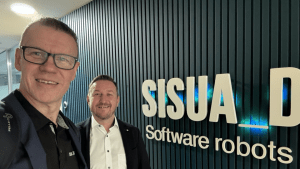
Markku Pitkänen appointed as CEO of Sisua Digital
The Board of Directors of Sisua Digital Oy has appointed Markku Pitkänen as the company’s new Chief Executive Officer. Pitkänen will assume his role on March 1, 2026.

10 Artificial Intelligence (AI) Trends That Will Define 2026
By 2026, AI will evolve into essential infrastructure, emphasizing human collaboration, continuous learning, specialization, and governance in organizations.